If you’ve been told your blood pressure is high, you’ve probably heard the familiar advice: eat less salt, get moving and watch your weight.
But how much difference can those changes actually make?
Research gives us some useful answers. Reducing a high salt intake can lower the top blood-pressure number by around five points in people with hypertension.
Regular exercise and changes to your everyday meals can also make a worthwhile difference.
The best place to start depends on your current habits. Someone who drinks heavily may benefit particularly from reducing alcohol. Someone who eats a lot of salty convenience foods has a different opportunity.
Here are seven practical changes, what the evidence suggests, and how to get started.
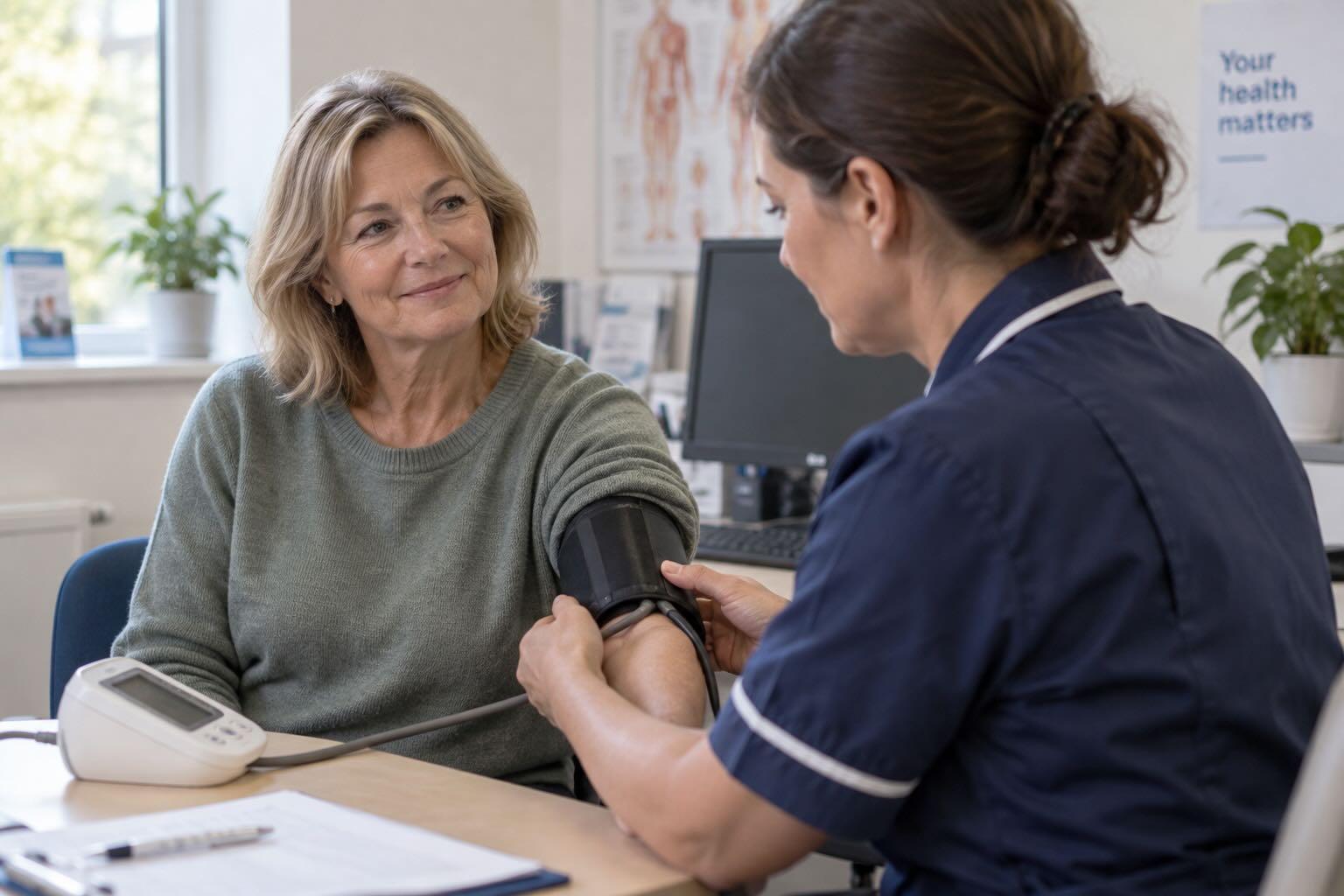
The figures below refer to systolic blood pressure: the top number in a reading such as 140/90. Blood pressure is measured in millimetres of mercury, abbreviated to mmHg.
These figures describe research findings, not guaranteed personal results.
The studies involved different people and approaches, so they are not a head-to-head ranking and cannot simply be added together.
A healthier eating pattern may reduce salt, increase potassium and help with weight at the same time.
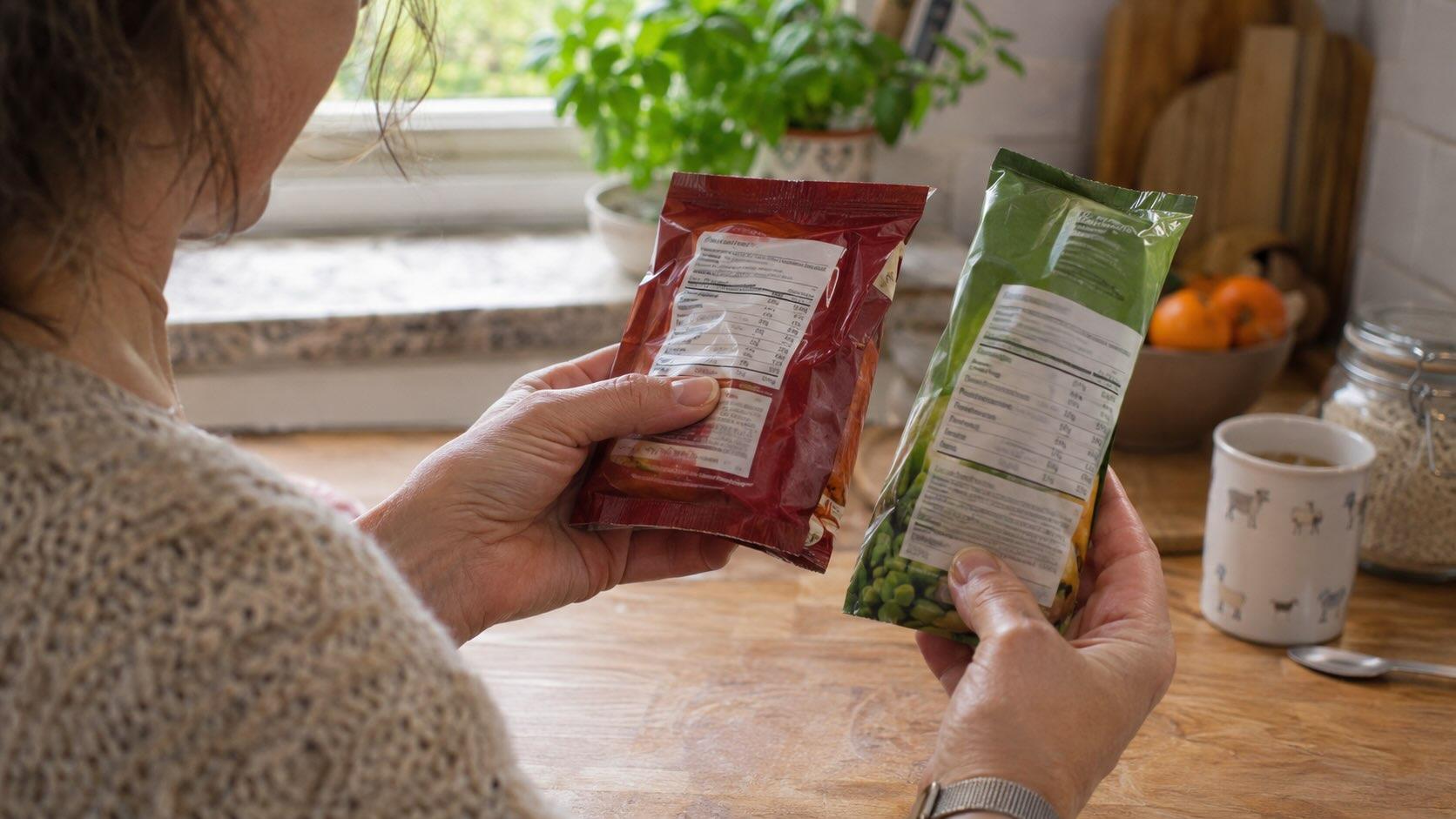
1. Cut back on salt
Average reduction: 5.4 mmHg in people with hypertension, after cutting salt by an average of 4.4g a day.
Who may benefit: People with hypertension and a high salt intake.
2. Follow a DASH-style eating pattern
Average reduction: 3.2 mmHg across adults with and without hypertension. US guidance separately estimates 5–8 mmHg for hypertension.
Who may benefit: People with hypertension, especially if their diet is low in fruit, vegetables and wholegrains.
3. Lose weight, if appropriate
Average reduction: 4.4 mmHg after an average weight loss of 5.1kg.
Who may benefit: People carrying excess weight.
4. Do regular aerobic activity
Average reduction: 4.5 mmHg across the exercise trials.
Who may benefit: People who can safely build regular walking, cycling or similar activity into their week.
5. Add dynamic strength training
Average reduction: 4.6 mmHg across the exercise trials.
Who may benefit: People who can safely add exercises using weights, bands or body weight.
6. Reduce a high alcohol intake
Average reduction: 5.5 mmHg when very heavy intake was reduced by roughly half.
Who may benefit: People drinking more than three UK units a day, with the largest reduction among those initially drinking at least nine units a day.
7. Choose potassium-rich foods, where suitable
Average reduction: 3.5 mmHg in trials mainly using supplements. This is not an estimate for food changes alone.
Who may benefit: People with hypertension, provided extra potassium is suitable for their kidney health and medicines.
Let’s look at what the research found and the practical steps you can take to help lower your blood pressure:
This is a useful place to start if your diet is high in salt.
A review of randomised trials found that reducing salt by an average of 4.4g a day lowered systolic pressure by about 5.4 mmHg in people with hypertension. Across all participants, including those without hypertension, the average fall was about 4.2 mmHg.[1]
The NHS advises adults to have no more than 6g of salt a day, including the salt already in food.[2]
Start with foods you eat often: bread, sauces, ready meals, cheese and processed meats. Compare similar products and choose the lower-salt version. Use herbs, spices, garlic or lemon to add flavour.[2]
Make the comparison part of your regular shopping, so the change becomes easier to maintain.
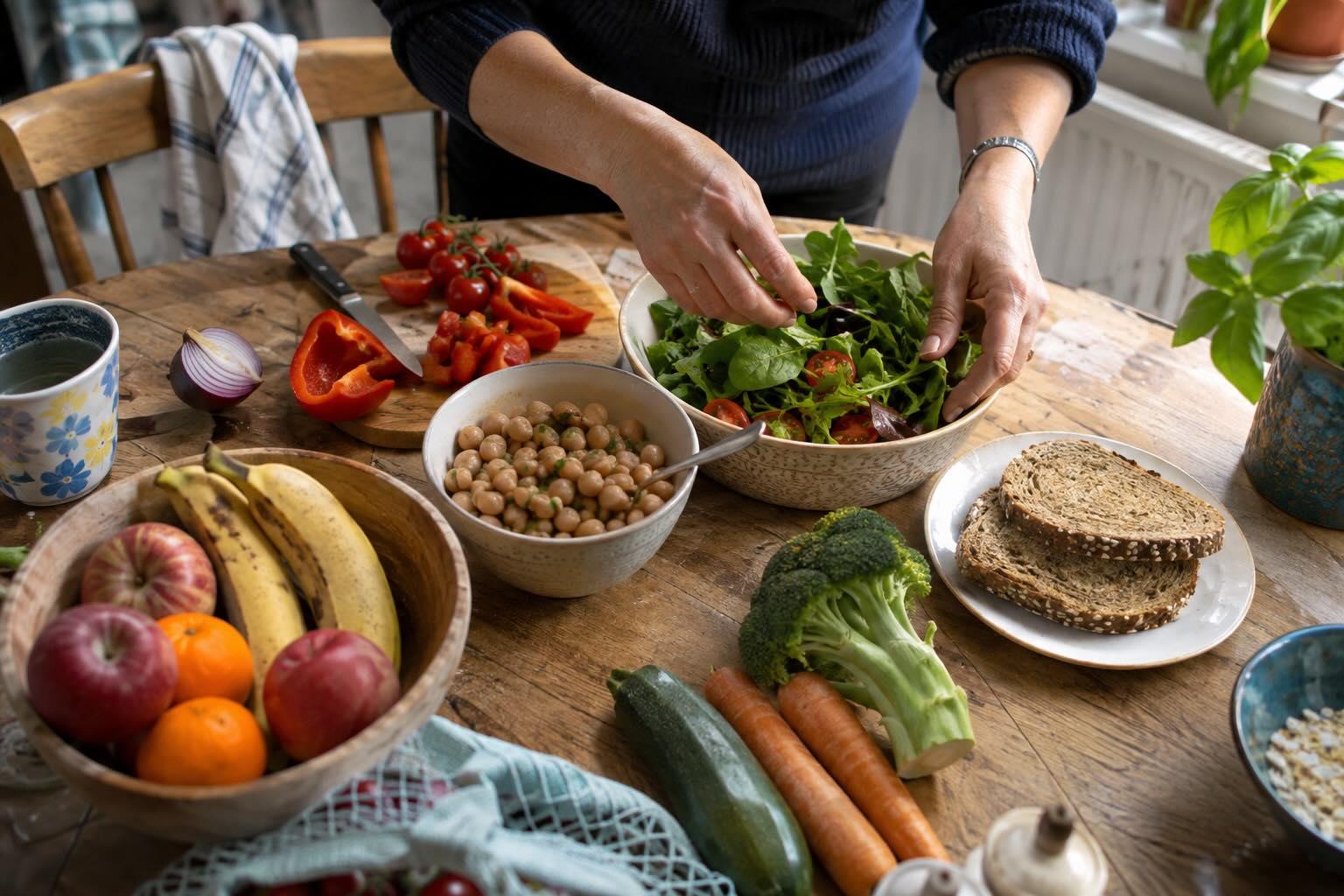
The DASH eating pattern was developed specifically to help lower blood pressure. The name stands for Dietary Approaches to Stop Hypertension.
It centres on vegetables, fruit, wholegrains, beans, nuts and lower-fat dairy foods, with less salt, saturated fat and sugary food.[3]
A 2020 review of 30 trials found an average systolic reduction of 3.2 mmHg across adults with and without hypertension.[4] The 2025 American blood-pressure guideline gives an approximate reduction of 5–8 mmHg for people with hypertension.[5]
You do not need a complicated meal plan to begin.
Try porridge with fruit for breakfast, add beans or lentils to a soup or casserole, and give vegetables more space on your plate. Choose unsalted nuts rather than salted snacks.
Think about the meals you already enjoy and which changes would be easiest to keep.
If you are carrying excess weight, a modest, sustainable reduction can help your blood pressure.
A review of weight-loss trials found that losing an average of 5.1kg (just over 11 pounds) reduced systolic pressure by about 4.4 mmHg.[6]
A useful first step is to choose one change you can maintain: smaller portions of calorie-dense foods, fewer sugary drinks, or planning meals before hunger makes the decision for you.
If you are already a healthy weight, focus on the other actions. If you need support, ask your GP practice about an appropriate approach.
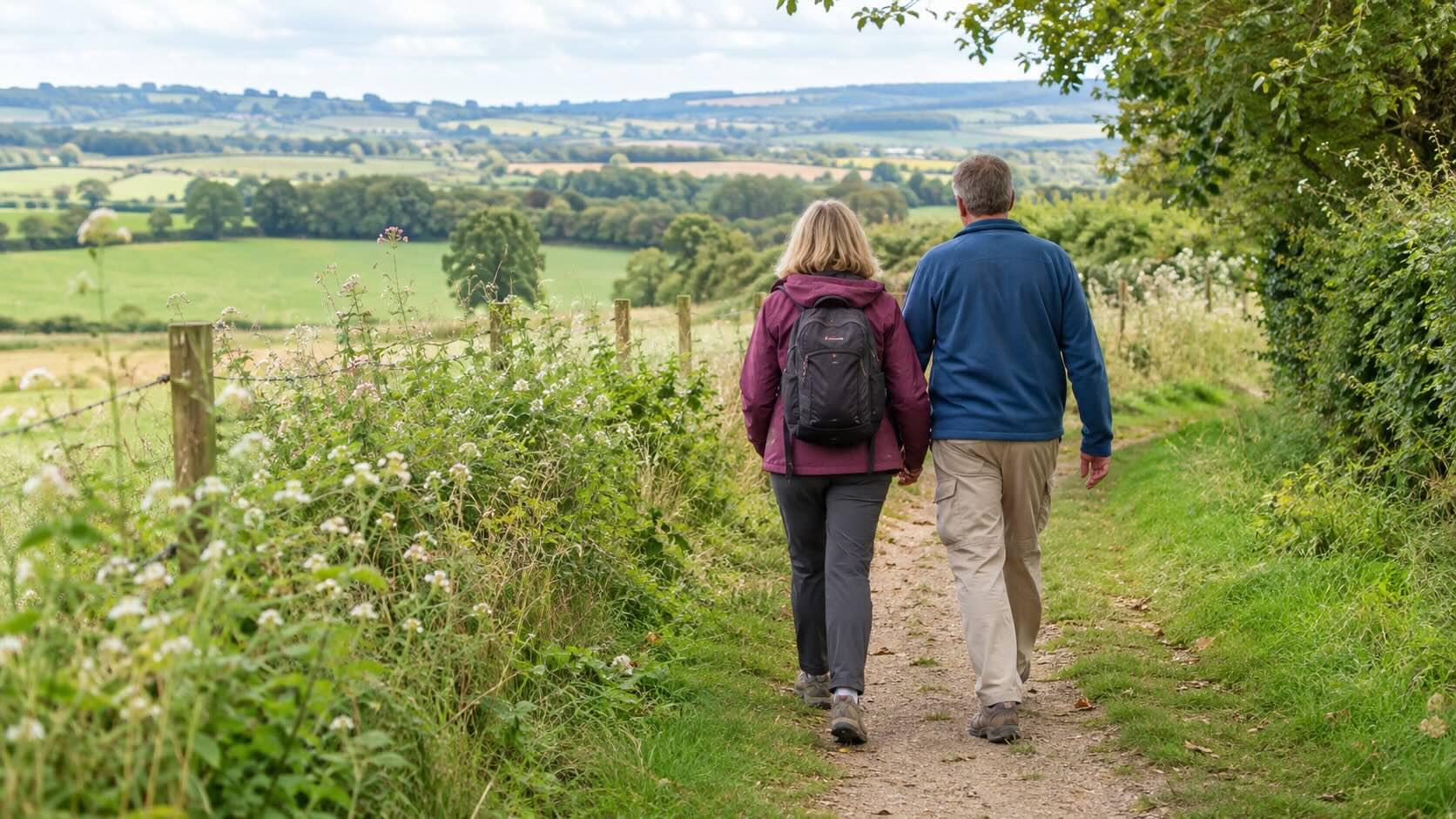
A large review of exercise trials found that aerobic training lowered resting systolic pressure by an average of about 4.5 mmHg.[7]
The UK recommendation is at least 150 minutes of moderate activity each week. At moderate intensity, your breathing is quicker but you can still talk.[8]
Brisk walking, cycling, swimming and dancing all count towards this.[8]
For many people, a brisk 30-minute walk on five days is a manageable goal. If that feels too much, begin with shorter walks and build up gradually.
Choose something you enjoy enough to repeat. A regular walk with a friend may fit your life better than an ambitious routine you struggle to maintain.
If your blood pressure is very high or uncontrolled, or you have a heart condition, ask your healthcare team what level of activity is suitable before starting a new programme.[9]
Aerobic activity is only part of the picture.
The same exercise review found that dynamic resistance training, where muscles work through a movement, lowered systolic pressure by about 4.6 mmHg on average.[7]
This can include exercises using resistance bands, manageable weights or your own body weight. UK guidance recommends strengthening activities on at least two days a week.[8]
You may also have seen headlines about wall sits and handgrip exercises. These are examples of isometric exercise, where muscles hold a contraction without movement. The review found an average systolic reduction of about 8.2 mmHg.[7]
However, there were fewer isometric studies, and the British Heart Foundation cautions that the studies were not straightforward like-for-like comparisons.[10] That larger number is not a reason to abandon walking or assume wall sits are best for everyone.
Build up gradually, breathe normally and avoid straining or holding your breath. Ask about suitable exercises if you have hypertension or heart disease.[9–11]
The blood-pressure benefit depends heavily on how much you currently drink.
A review of 36 trials found that cutting down lowered blood pressure in people who had been drinking more than two of the study’s standard drinks a day, with larger reductions at higher intakes. People drinking two or fewer study drinks (about three UK units a day) showed no significant change.[12]
The biggest effect was among people drinking at least six study drinks daily: reducing intake by around half lowered systolic pressure by about 5.5 mmHg. Each study drink contained 12g of alcohol, so six equals 72g, or nine UK units.[12,13]
The UK guideline is not to drink more than 14 units a week regularly.[13] Check the units in your usual drinks, because a glass or bottle can contain more than you expect.
Smaller servings and lower-strength or alcohol-free alternatives are practical options. If you may be dependent on alcohol, get medical advice before stopping or sharply reducing it. Sudden withdrawal can be dangerous.[14]
Potassium helps regulate blood pressure. Beans, lentils, potatoes, vegetables, fruit and yoghurt can contribute to your intake.[15,16]
A review of potassium trials, most of which used supplements, found an average systolic reduction of about 3.5 mmHg, with the benefit concentrated in people with hypertension.
This combined result does not tell us the reduction from food changes alone.[15]
For everyday eating, focus on a variety of potassium-rich foods: add beans to a meal, choose fruit as a snack, or include an extra portion of vegetables.[15,16]
There is an important caution: kidney disease and some medicines can make extra potassium unsafe. Check with your doctor before substantially increasing your intake in these circumstances. Do not start potassium supplements or potassium-based salt substitutes without checking they are suitable.[16]
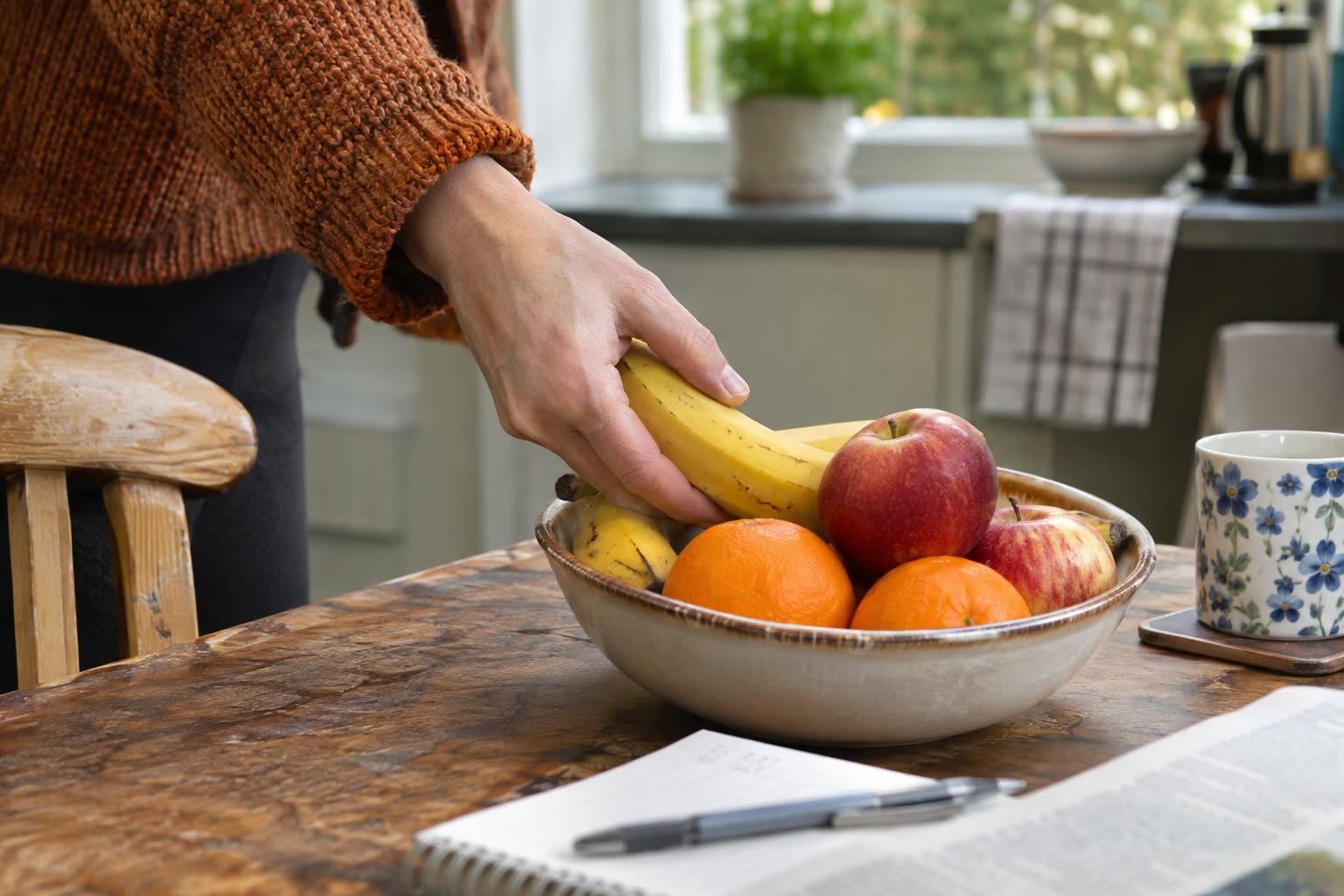
Choose a practical step for the coming week that fits your starting point.
If salty foods feature in most meals, compare labels on your regular shopping. If you are largely inactive, begin with a short daily walk. If alcohol is a significant part of your week, check the units in your usual drinks.
Once that change feels manageable, build from there. Sustainable habits, regular blood-pressure checks and the right treatment can work together.
Stopping smoking is also important for reducing heart disease and stroke risk.[17]
High blood pressure usually has no symptoms. Feeling well cannot tell you whether it is under control.[18]
A validated upper-arm monitor with the right cuff size can help you and your GP assess your readings. Rest quietly for five minutes first, sit with your back supported and feet flat, support your arm at heart level, and do not talk during the measurement.[19]
When home monitoring is used to confirm a diagnosis, NICE recommends two seated readings at least a minute apart, morning and evening, for at least four days and ideally seven. The first day is excluded and the remaining readings averaged.[20]
Ask your GP or pharmacist to show you the correct technique. Follow any monitoring plan your healthcare team has already given you.
Arrange a GP review if readings are repeatedly high. Hypertension is usually confirmed at 140/90 mmHg or higher in clinic and 135/85 mmHg or higher at home. Either number can be high.[18,20]
Some people also need medication. Do not stop or reduce it without speaking to your prescriber.[18,21]
Call 999 immediately for suspected heart-attack or stroke symptoms, or severe breathing difficulty. Don’t delay to take a reading.[18,22,23]
If your reading is 180 or above on top, or 120 or above below, sit quietly and repeat it. If still high, seek advice from your GP that day, or NHS 111.[20,24]
If pregnant, contact your maternity team: different thresholds apply.[25]
1. Which change will make the biggest difference for me?
That depends on your starting point. Reducing a high salt or alcohol intake may be particularly useful if either is part of your routine. If you are inactive, building regular movement into your week is a sensible place to begin. Your healthcare team can help you prioritise.
2. Can I lower my blood pressure without medication?
Some people can manage their blood pressure with lifestyle changes, but others need medication as well. The decision depends on your readings and overall risk. If medicine has been prescribed, keep taking it unless your prescriber advises a change.[18,21]
3. Can I add the reductions together?
No. The figures come from different studies, and several actions overlap. Eating differently may change your salt intake, potassium intake and weight together. Use the figures to understand the scale of potential benefits, not to calculate a personal total.
4. Should I take potassium supplements or use a salt substitute?
Check with your doctor or pharmacist first. Potassium supplements and potassium-based salt substitutes are unsuitable for some people, particularly those with kidney problems or taking certain medicines. For most people, a varied diet is the practical starting point.[16]
5. Can I tell whether my blood pressure is high by how I feel?
Usually not. High blood pressure often has no symptoms. A properly taken blood-pressure measurement is the way to check, and repeated measurements may be needed to confirm the result.[18]
This article is for general information only and is not intended to treat or diagnose medical conditions. If in doubt please check with your GP first.
[1] He FJ, Li J, MacGregor GA. Effect of longer term modest salt reduction on blood pressure: Cochrane systematic review and meta-analysis of randomised trials. BMJ. 2013;346:f1325. https://doi.org/10.1136/bmj.f1325
[2] NHS. Salt in your diet. https://www.nhs.uk/live-well/eat-well/food-types/salt-in-your-diet/
[3] British Heart Foundation. DASH diet explained. https://www.bhf.org.uk/informationsupport/heart-matters-magazine/nutrition/foods-that-lower-blood-pressure/dash-diet
[4] Filippou CD, Tsioufis CP, Thomopoulos CG, Mihas CC, Dimitriadis KS, Sotiropoulou LI, et al. Dietary Approaches to Stop Hypertension (DASH) diet and blood pressure reduction in adults with and without hypertension: a systematic review and meta-analysis of randomized controlled trials. Adv Nutr. 2020;11(5):1150-60. https://doi.org/10.1093/advances/nmaa041
[5] Jones DW, Ferdinand KC, Taler SJ, Johnson HM, Shimbo D, Abdalla M, et al. 2025 AHA/ACC/AANP/AAPA/ABC/ACCP/ACPM/AGS/AMA/ASPC/NMA/PCNA/SGIM guideline for the prevention, detection, evaluation and management of high blood pressure in adults: a report of the American College of Cardiology/American Heart Association Joint Committee on Clinical Practice Guidelines. Hypertension. 2025;82(10):e212-e316. https://doi.org/10.1161/HYP.0000000000000249
[6] Neter JE, Stam BE, Kok FJ, Grobbee DE, Geleijnse JM. Influence of weight reduction on blood pressure: a meta-analysis of randomized controlled trials. Hypertension. 2003;42(5):878-84. https://doi.org/10.1161/01.HYP.0000094221.86888.AE
[7] Edwards JJ, Deenmamode AHP, Griffiths M, Arnold O, Cooper NJ, Wiles JD, et al. Exercise training and resting blood pressure: a large-scale pairwise and network meta-analysis of randomised controlled trials. Br J Sports Med. 2023;57(20):1317-26. https://doi.org/10.1136/bjsports-2022-106503
[8] NHS. Physical activity guidelines for adults aged 19 to 64. https://www.nhs.uk/live-well/exercise/physical-activity-guidelines-for-adults-aged-19-to-64/
[9] Blood Pressure UK. Exercise & physical activity. https://www.bloodpressureuk.org/your-blood-pressure/how-to-lower-your-blood-pressure/healthy-living/exercise-physical-activity/
[10] British Heart Foundation. Can wall squats and planks lower your blood pressure? https://www.bhf.org.uk/informationsupport/heart-matters-magazine/news/behind-the-headlines/can-planks-lower-blood-pressure
[11] British Heart Foundation. Best exercises for heart health. https://www.bhf.org.uk/informationsupport/heart-matters-magazine/activity/exercises-heart-health
[12] Roerecke M, Kaczorowski J, Tobe SW, Gmel G, Hasan OSM, Rehm J. The effect of a reduction in alcohol consumption on blood pressure: a systematic review and meta-analysis. Lancet Public Health. 2017;2(2):e108-20. https://doi.org/10.1016/S2468-2667(17)30003-8
[13] NHS. Alcohol units. https://www.nhs.uk/live-well/alcohol-advice/calculating-alcohol-units/
[14] NHS. Alcohol-use disorder. https://www.nhs.uk/conditions/alcohol-use-disorder/
[15] Aburto NJ, Hanson S, Gutierrez H, Hooper L, Elliott P, Cappuccio FP. Effect of increased potassium intake on cardiovascular risk factors and disease: systematic review and meta-analyses. BMJ. 2013;346:f1378. https://doi.org/10.1136/bmj.f1378
[16] Blood Pressure UK. Potassium and your blood pressure. https://www.bloodpressureuk.org/your-blood-pressure/how-to-lower-your-blood-pressure/healthy-eating/potassium-and-your-blood-pressure-/
[17] NHS Better Health. Benefits of quitting smoking. https://www.nhs.uk/better-health/quit-smoking/why-quit-smoking/benefits-of-quitting-smoking/
[18] NHS. High blood pressure. https://www.nhs.uk/conditions/high-blood-pressure/
[19] British Heart Foundation. How to measure your blood pressure at home. https://www.bhf.org.uk/informationsupport/heart-matters-magazine/medical/tests/blood-pressure-measuring-at-home
[20] National Institute for Health and Care Excellence. Hypertension in adults: diagnosis and management. NICE guideline NG136. https://www.nice.org.uk/guidance/ng136/chapter/recommendations
[21] British Heart Foundation. What side effects can you get with blood pressure tablets? https://www.bhf.org.uk/informationsupport/heart-matters-magazine/medical/blood-pressure-medicine-side-effects
[22] NHS. Symptoms of a stroke. https://www.nhs.uk/conditions/stroke/symptoms/
[23] NHS. Shortness of breath. https://www.nhs.uk/symptoms/shortness-of-breath/
[24] NHS England. Advanced service specification: NHS community pharmacy hypertension case-finding advanced service (NHS community pharmacy blood pressure check service). https://www.england.nhs.uk/wp-content/uploads/2021/11/PRN00948-nhs-community-pharmacy-hypertension-case-finding-advanced-service-v2.3.pdf
[25] NHS. High blood pressure (hypertension) and pregnancy. https://www.nhs.uk/pregnancy/existing-health-conditions/high-blood-pressure/

Mediterranean Diet Slashes Early Death Risk in Women by Nearly 25%, Study Finds
Bananas: Effective in Lowering Blood Pressure New Study Suggests

Shedding Just 5%: The Small Weight Loss with Massive Benefits