
We already know that keeping active is good for our heart, muscles and general health.
But could the type of physical activity we do also make a difference to our risk of dementia?
New research published in The Lancet Public Health has taken a closer look at this question — with some surprising results.
Researchers brought together evidence from 74 studies involving more than 4.2 million people and found that people with high overall levels of physical activity had a 20% lower risk of developing dementia compared with those with low levels of activity.
But when they looked at where that physical activity came from, they found something particularly interesting.
Exercise and activity performed during our leisure time were associated with a lower risk of dementia, while physical activity at work did not show the same relationship.
So could going for a walk, cycling, gardening or dancing really be different from spending all day on your feet at work?
Let’s look at what the researchers found.
The study was a systematic review and meta-analysis published in The Lancet Public Health in 2026.
Rather than carrying out a single experiment, researchers brought together evidence from 74 previous studies involving 4,227,297 people.
The participants had a median age of just over 67, and the studies followed people for a median of around 10 years.
When people with high levels of overall physical activity were compared with those with low levels, higher activity was associated with:
20% lower risk of all-cause dementia
21% lower risk of Alzheimer’s disease
29% lower risk of vascular dementia
Those are substantial differences.
But they don’t mean exercise has been proven to reduce an individual’s dementia risk by these exact percentages.
Most of the evidence was observational. Researchers observed people’s activity levels and what happened to their health over time rather than randomly assigning people to exercise or not exercise.
So the results show an association between greater physical activity and lower dementia risk, rather than proving that physical activity alone caused the difference.

This is where the study becomes particularly interesting.
Physical activity doesn’t just mean deliberate exercise. We can be active during our leisure time, at work, while travelling or commuting, and around the home.
When the researchers examined these different types of activity separately, they found very different associations with dementia risk:
Leisure-time activity: around 24% lower risk
Household activity: around 15% lower risk
Occupational activity: around 20% higher observed risk
Commuting activity: around 10% higher observed risk
However, these figures aren’t all supported by equally strong evidence. In particular, the household finding came from only one study, so considerably more research is needed before firm conclusions can be drawn from it.
Of the different types, leisure-time physical activity produced one of the clearest favourable associations.
People with high levels of leisure-time activity had around a 24% lower risk of all-cause dementia compared with those with low levels. Leisure-time activity can take many forms, including:
brisk walking
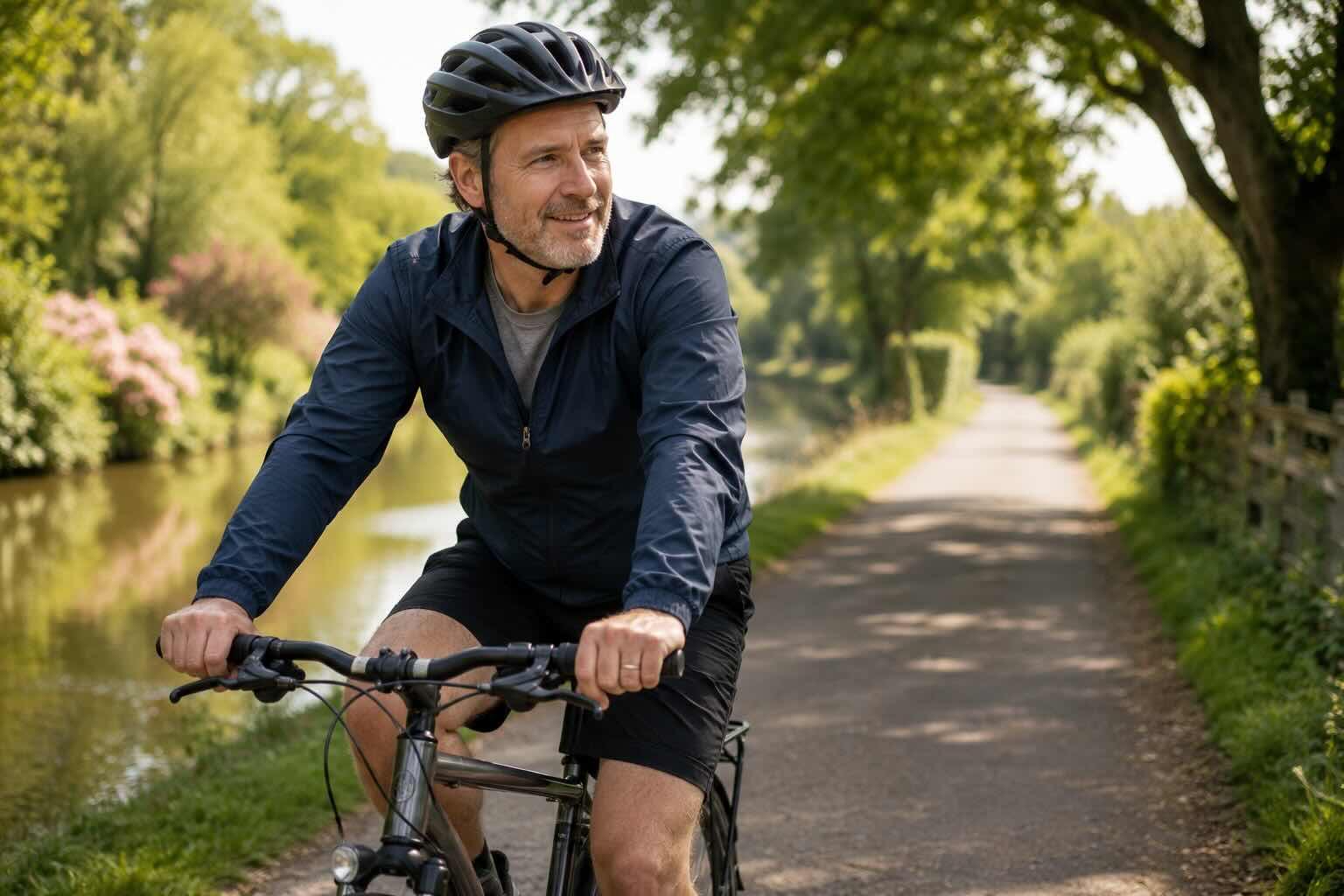
cycling
swimming
dancing
gardening
exercise classes
sport
jogging
You certainly don’t have to be running marathons.
Current NHS advice recommends that adults aged 65 and over aim for at least 150 minutes of moderate-intensity activity each week, or 75 minutes of vigorous activity if already active.
The NHS also recommends activities that improve strength, balance and flexibility on at least two days a week, and being physically active every day — even if some of that activity is light.

Here’s where the findings become surprising.
People with high levels of occupational physical activity had around a 20% higher observed risk of dementia compared with those reporting low levels.
Before concluding that physical work is somehow bad for the brain, however, there are some important reasons to be cautious.
People with physically demanding jobs may differ from those with less physical jobs in many other ways, including education, income, working hours, stress, diet, environmental exposures and opportunities for recreational exercise.
So the study does not show that having a physically demanding job causes dementia.
Instead, it raises an intriguing question: why doesn’t physical activity at work appear to have the same relationship with dementia risk as activity we choose to do in our leisure time?
Researchers sometimes refer to a similar phenomenon as the physical activity paradox.
The researchers also looked at physical activity used for transport or commuting.
Higher levels of commuting-related physical activity were associated with around a 10% higher observed risk of dementia.
Again, this does not mean that walking or cycling somewhere causes dementia.
Commuting habits are closely connected with where people live, occupation, income, education, access to transport and many other factors. The finding therefore adds to the puzzle rather than providing evidence that active travel is harmful.
We don’t yet know for certain.
One possibility is that leisure-time exercise often happens in relatively short periods followed by recovery.
A brisk walk, bike ride or swim can raise the heart rate and challenge the cardiovascular system before allowing the body time to recover.
Physical work can be very different. Someone may spend many hours standing, lifting, carrying or performing repetitive tasks without necessarily raising their heart rate in the same way as purposeful aerobic exercise.
Occupational activity can also involve prolonged physical work without the same opportunities for recovery.
There may also be differences in the intensity and type of movement involved.
These are possible explanations rather than conclusions from the study, however, and more research is needed to understand why the associations appear to differ.
Our brains don’t exist separately from the rest of our bodies.
Many of the things that help protect our cardiovascular health are also associated with brain health.
Regular physical activity can help maintain cardiovascular fitness and is associated with healthier blood pressure, blood sugar regulation and body weight.
That matters because conditions including high blood pressure, diabetes and cardiovascular disease are themselves associated with dementia risk.
Research also suggests that regular exercise can influence blood flow to the brain and biological processes involved in maintaining healthy brain tissue, although exactly how these mechanisms translate into dementia prevention is still being investigated.
The connection is sufficiently well established that both the NHS and World Health Organization include physical activity within their advice on reducing the risk of dementia and cognitive decline.
The World Health Organization published the second edition of its guidelines on reducing the risk of cognitive decline and dementia in July 2026.
The updated guidance takes a life-course approach to brain health and considers a wide range of potentially modifiable risk factors.
These include physical inactivity, smoking, harmful alcohol consumption, diet, obesity, diabetes, high blood pressure, high cholesterol, hearing loss, depression, stroke, traumatic brain injury, vision impairment, sleep and air pollution.
The important point is that dementia risk isn’t determined by one single behaviour. Age and genetics play an important role, alongside our health, lifestyle and environment.
There is also no guaranteed way to prevent dementia. But there are things we can do throughout life that are associated with better general and brain health — and staying physically active is one of them.
Perhaps the most useful message from all this research is that looking after our health doesn’t require becoming a marathon runner.
The NHS recommends regular moderate activity such as brisk walking, cycling, dancing or swimming, alongside activities that help maintain strength as we get older.
And if you currently do very little exercise, simply becoming a little more active can be a good place to start.
So, does the type of exercise matter? We can’t say for certain yet. This research shows an association rather than proof, and the evidence for the individual types of activity remains limited.
But while nobody can promise that a daily walk, swim or bike ride will prevent dementia, there are already plenty of good reasons to keep moving.
And this latest research raises an intriguing possibility: when it comes to our long-term brain health, how we get our physical activity may matter as well as how much we do.

1. Can exercise prevent dementia?
There is no guaranteed way to prevent dementia, but regular physical activity is associated with a lower risk. The latest research found around a 20% lower risk among people with high levels of physical activity.
2. What type of exercise is best for reducing dementia risk?
We don’t know if one type is best. In the new research, leisure-time physical activity showed the strongest favourable association, with around a 24% lower risk of dementia.
3. Is walking good for reducing dementia risk?
Brisk walking counts as moderate-intensity exercise and is an easy way to stay active. However, no particular amount of walking can guarantee that someone will or won’t develop dementia.
4. How much exercise should I do?
The NHS recommends that adults aged 65 and over aim for at least 150 minutes of moderate activity a week, alongside activities to improve strength, balance and flexibility.
5. Does being physically active at work protect against dementia?
Not according to this study. Higher occupational activity was associated with a 20% higher observed risk, although this does not mean physical work causes dementia.
6. Does walking or cycling to work increase dementia risk?
There’s no evidence that walking or cycling to work causes dementia. Although commuting activity was associated with a 10% higher observed risk, other lifestyle, occupational and socioeconomic factors could explain this finding.
7. Is it too late to start exercising in your 60s or 70s?
No. Physical activity provides health benefits at every age, and the NHS recommends that people aged 65 and over remain active every day.
This article is for general information only and is not intended to treat or diagnose medical conditions. If in doubt please check with your GP first.
Feter N, Iso-Markku P, Markarian T, et al. Domain-specific physical activity levels and risk of dementia: a systematic review and meta-analysis. Lancet Public Health. 2026;11(9):e650-e664. doi:10.1016/S2468-2667(26)00142-8.
World Health Organization. Risk reduction of cognitive decline and dementia: WHO guidelines, second edition. Geneva: World Health Organization; 2026.
NHS. Can dementia be prevented? NHS. Accessed August 2026.
NHS. Physical activity guidelines for older adults. NHS. Accessed August 2026.

Mediterranean Diet Slashes Early Death Risk in Women by Nearly 25%, Study Finds

Bananas: Effective in Lowering Blood Pressure New Study Suggests

Shedding Just 5%: The Small Weight Loss with Massive Benefits