For many of us, the day begins with a cup of coffee.
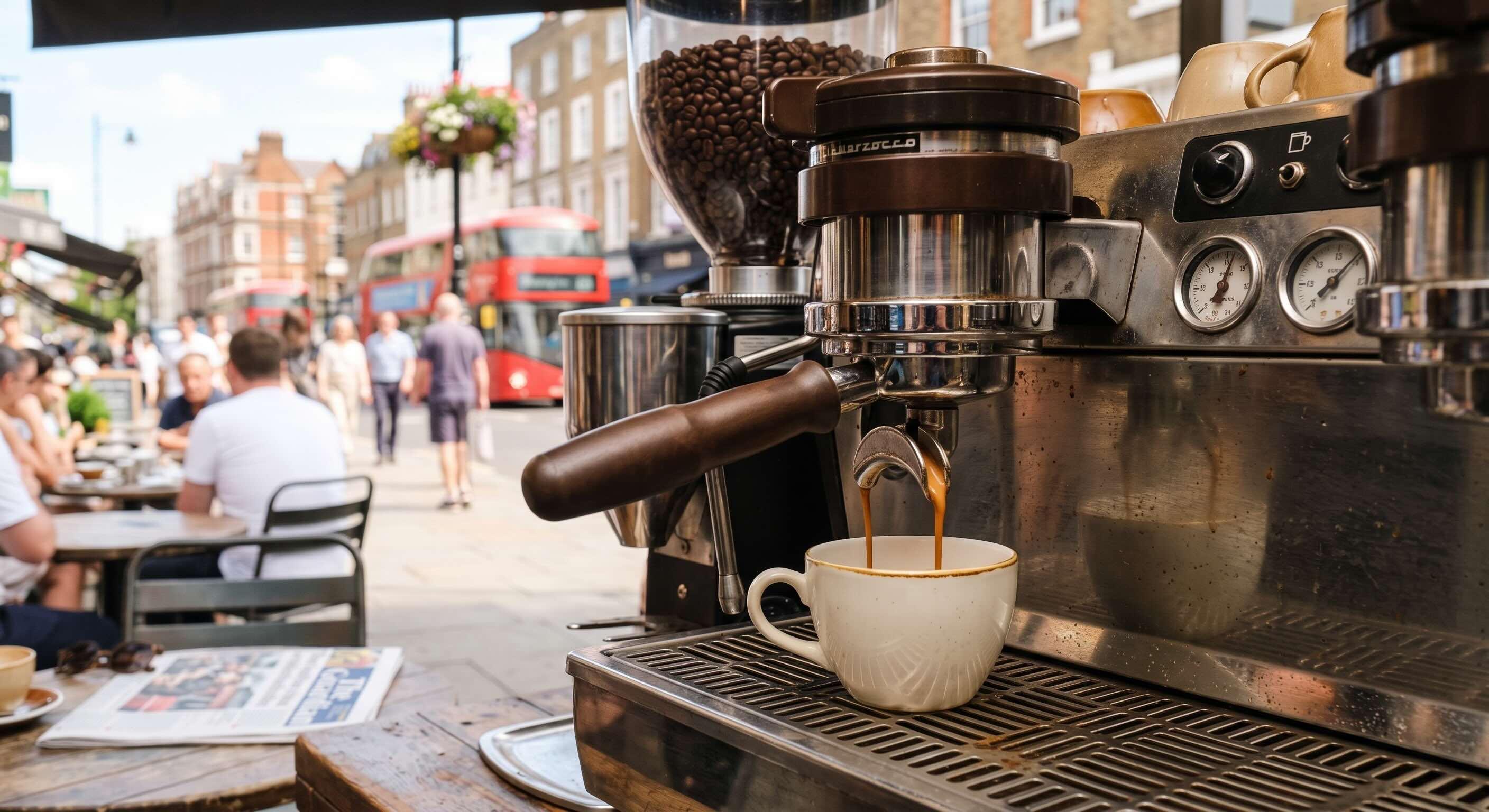
Whether it's enjoyed first thing in the morning or during a mid-afternoon break, coffee is one of the world's most popular drinks. In the UK, around 98 million cups of coffee are drunk every day.⁵
Over the past two decades, scientists have also become increasingly interested in coffee's potential health benefits.
While much attention has focused on heart health and type 2 diabetes, growing evidence suggests that coffee may also support one of the body's hardest-working organs: the liver.¹
A large study using data from the UK Biobank followed 354,957 adults for a median of 13 years and found that regular coffee drinkers had a lower risk of developing cirrhosis, liver cancer and dying from liver disease than people who did not drink coffee.¹
Perhaps most encouragingly, the researchers found similar associations for both caffeinated and decaffeinated coffee.¹
Your liver performs hundreds of essential functions every day. Among other roles, it:
Filters waste products from the blood.
Produces bile to help digest fats.
Stores vitamins and minerals.
Helps regulate blood sugar.
Processes many medicines.
Produces proteins needed for normal blood clotting.
Plays a central role in cholesterol and fat metabolism.
The liver has a remarkable ability to repair itself, but long-term damage can eventually lead to scarring (fibrosis) and, in some people, cirrhosis.
This may result from conditions such as non-alcoholic fatty liver disease, excessive alcohol intake or chronic viral hepatitis.²
Researchers analysed health data from 354,957 participants in the UK Biobank and followed them for a median of 13 years.¹
Compared with people who did not drink coffee, those who regularly drank coffee had lower risks of:
Cirrhosis
Liver cancer (hepatocellular carcinoma)
Death from liver disease¹
Benefits were already apparent among people drinking around one to two cups per day, who had approximately:
20% lower risk of cirrhosis
24% lower risk of liver cancer
31% lower risk of liver-related death¹
Overall, higher coffee consumption was associated with greater reductions in risk, although the pattern differed between individual liver outcomes.
For liver cancer, people drinking five or more cups per day had an estimated 47% lower risk than non-drinkers.¹
For cirrhosis, however, the reduction appeared to plateau rather than continue to increase at the highest intake levels, suggesting that more coffee is not necessarily associated with proportionally greater benefits.¹
As with all observational research, these findings show an association rather than proving that coffee itself reduced the risk.

One of the most interesting findings was that decaffeinated coffee showed similar associations with better liver health.¹
This suggests that the potential benefits are not simply due to caffeine, but may also come from other naturally occurring compounds found in coffee.
Coffee naturally contains hundreds of plant compounds, including:
Chlorogenic acids
Polyphenols
Melanoidins
Diterpenes
Many of these compounds have antioxidant and anti-inflammatory properties, and researchers believe they may help reduce inflammation, oxidative stress and liver scarring.³
For people who enjoy coffee but prefer to limit their caffeine intake, these findings are reassuring.
Researchers are still working to understand exactly how coffee may influence liver health.
Several mechanisms have been proposed, including:
Reducing oxidative stress.
Lowering chronic inflammation.
Improving insulin sensitivity.
Reducing the build-up of fat within the liver.
Slowing the development of liver fibrosis.³
Unlike many earlier studies, this research also included MRI liver scans and proteomic (blood protein) analysis. Coffee drinkers tended to have less liver fat on MRI scans and blood protein patterns associated with healthier liver tissue, providing additional support for the observational findings.¹

Not necessarily.
Because this was an observational study, it cannot prove that coffee itself reduced the risk of liver disease.
Although the researchers adjusted for many lifestyle and health factors, it remains possible that other differences between coffee drinkers and non-drinkers contributed to the findings.¹
However, these results are consistent with many previous studies from around the world, strengthening the evidence for an association between coffee consumption and better liver outcomes.
If you already enjoy coffee and it agrees with you, these findings provide reassurance that moderate coffee consumption can form part of a healthy diet.
If you do not drink coffee, there is currently no recommendation to start purely because of these findings.
Coffee is only one part of the picture.
Important ways to support your liver health include:
Maintaining a healthy weight.
Eating a balanced diet.
Being physically active.
Keeping alcohol intake within recommended limits and, if you are trying to cut down, having several drink-free days each week.⁴
Managing type 2 diabetes if you have it.
Avoiding smoking.
These lifestyle factors have a much greater influence on liver health than any single food or drink.
The evidence linking coffee with better liver health continues to grow.
This large study using data from the UK Biobank found that regular coffee drinkers had lower rates of cirrhosis, liver cancer and liver-related death over more than a decade of follow-up.¹
Importantly, both caffeinated and decaffeinated coffee showed similar associations, suggesting that naturally occurring compounds within coffee, rather than caffeine alone, may help support liver health.
Although coffee is not a substitute for a healthy lifestyle, the latest evidence suggests that, for many people, enjoying a daily cup of coffee can be part of an overall healthy diet.

1. Does decaffeinated coffee offer the same benefits?
This study found that both caffeinated and decaffeinated coffee were associated with lower risks of liver disease, suggesting that compounds naturally present in coffee, rather than caffeine alone, may contribute to these benefits.¹
2. How much coffee was linked with better liver health?
Benefits were already seen among people drinking around one to two cups a day. Associations generally became stronger with higher intake, although the reduction in cirrhosis appeared to plateau at the highest levels of consumption.¹
3. Should I start drinking coffee if I don't already?
No. This study does not prove that coffee directly protects the liver, and there is currently no recommendation for non-coffee drinkers to begin drinking coffee solely for liver health.
4. Does it matter whether the coffee is instant, filtered or espresso?
This study examined overall coffee consumption rather than comparing different brewing methods. More research is needed to determine whether different types of coffee have different effects.¹
5. What about adding sugar or flavoured syrups?
The study did look at this. People who added sugar or sweeteners to their coffee still showed an overall protective association with liver outcomes, but sweetener use was linked to a modestly higher marker of liver inflammation on MRI scans. Black coffee, or coffee with minimal additives, is likely to be the better choice if you want to maximise the potential benefit.
6. Can people with liver disease drink coffee?
Many people with liver disease can continue to drink coffee, but if you have an existing liver condition or have been advised to limit caffeine, you should follow the advice of your GP or liver specialist.
This article is for general information only and is not intended to treat or diagnose medical conditions. If in doubt please check with your GP first.
Kim HS, Rezaee-Zavareh MS, Wang Y, et al. Coffee Consumption and Improved Liver Outcomes: Clinical, Imaging, and Proteomic Evidence From the UK Biobank. Clinical Gastroenterology and Hepatology. 2026. doi:10.1016/j.cgh.2026.04.035.
NHS. Liver disease. Available from: https://www.nhs.uk/conditions/liver-disease/
Kennedy OJ, Roderick P, Buchanan R, et al. Coffee, including caffeinated and decaffeinated coffee, and the risk of hepatocellular carcinoma: a systematic review and dose-response meta-analysis. BMJ Open. 2017;7:e013739.
NHS. The risks of drinking too much. Available from: https://www.nhs.uk/live-well/alcohol-advice/the-risks-of-drinking-too-much/
British Coffee Association. Coffee Consumption. Available from: https://britishcoffeeassociation.org/coffee-consumption/

Mediterranean Diet Slashes Early Death Risk in Women by Nearly 25%, Study Finds
Bananas: Effective in Lowering Blood Pressure New Study Suggests

Shedding Just 5%: The Small Weight Loss with Massive Benefits