A study that followed more than 47,000 women for up to 32 years found that those who ate more fibre-rich carbohydrates in midlife were more likely to stay well into their 70s and beyond.[1]
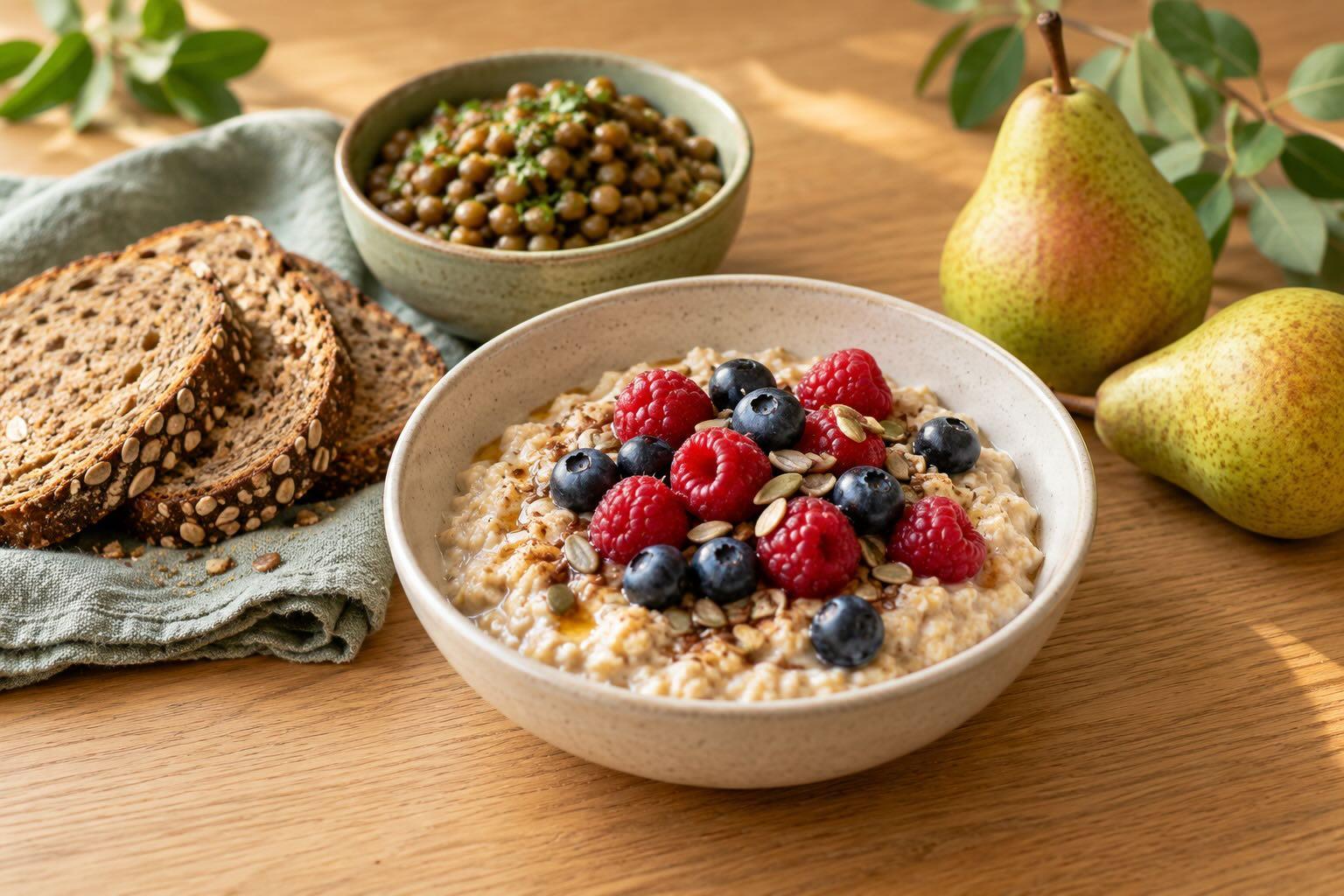
“Carbs” often brings bread, pasta and potatoes to mind. But fruit, beans, lentils and porridge oats contain them too.[2]
So what makes these foods different, and which carbohydrate choices could help us age well?
“Carbs” is simply short for carbohydrates. Alongside protein and fat, they are one of the main nutrients in our diet.
There are three main types:
Sugars: found naturally in foods such as fruit and milk, and added to foods and drinks such as cakes, biscuits and fizzy drinks.
Starch: found in foods including bread, rice, pasta, potatoes, oats, beans and lentils. During digestion, starch is broken down into glucose, which the body uses for energy.
Fibre: a type of carbohydrate that is not digested and absorbed in the small intestine. It supports digestion, and some types provide food for beneficial gut bacteria.
Many foods contain a mixture. An apple, for example, provides both naturally occurring sugars and fibre. Beans and lentils provide starch and fibre, as well as protein.[2]
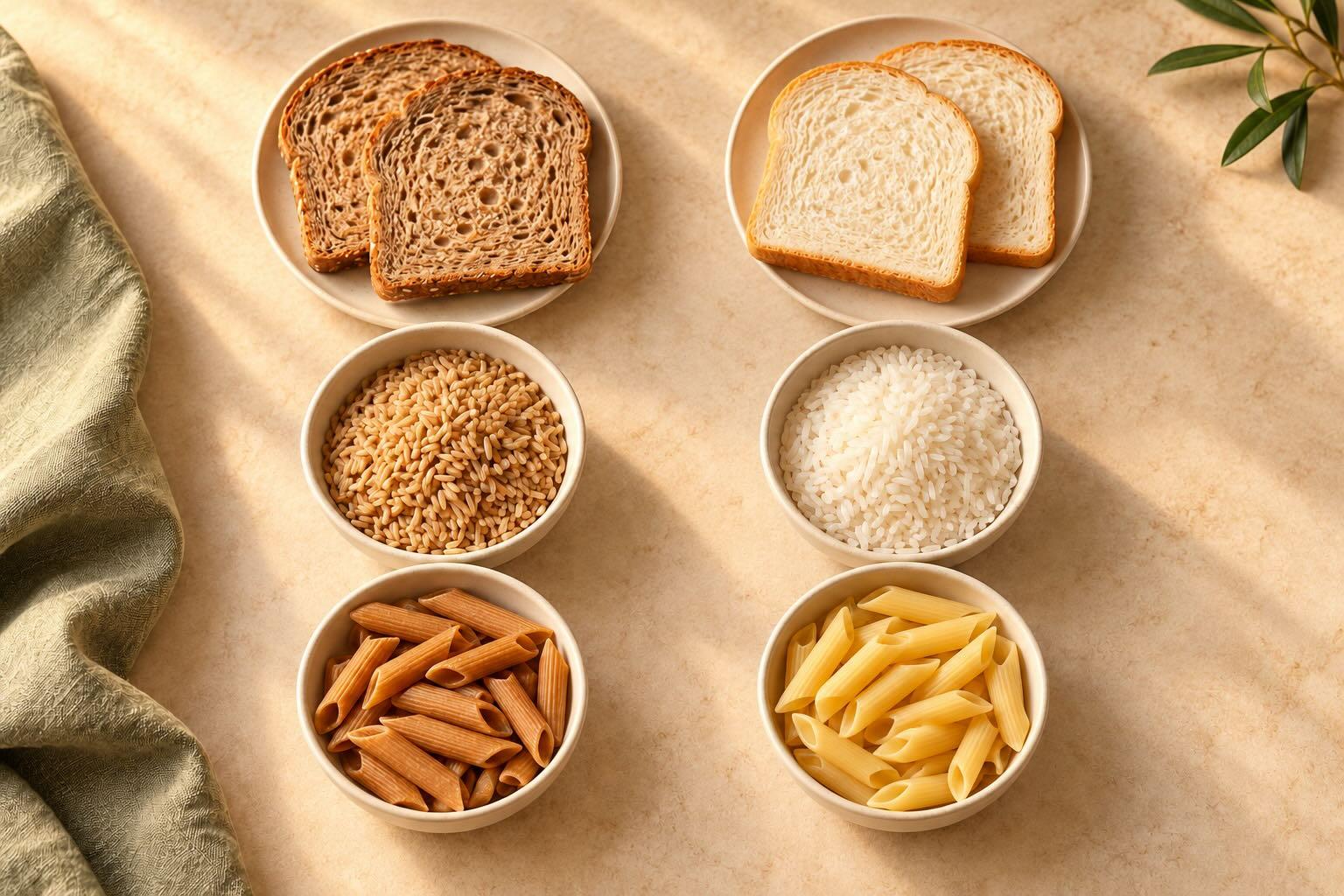
A grain has three main parts: an outer layer called the bran, an inner part called the germ, and a starchy centre. Wholegrains retain all three.
Refining grains to make white flour or white rice removes the bran and germ. This reduces their fibre content and removes some of their other nutrients.
Wholemeal bread and white bread therefore both contain carbohydrates, but wholemeal bread generally provides more fibre. Brown rice and wholewheat pasta offer similar advantages over their white versions.
Look for “wholemeal”, “wholewheat” or “wholegrain” on the ingredients list.
“Multigrain” means a food contains several types of grain; it does not necessarily mean those grains are whole.
Women who ate more fibre-rich carbohydrate foods in midlife were more likely to age well.[1]
The research followed 47,513 US women for up to 32 years.
“Healthy ageing” meant reaching 70 or older without 11 major chronic diseases, with good self-reported memory, physical function and mental health. Overall, 3,706 women (7.8%) met this definition.
After taking account of smoking, physical activity and other differences, researchers compared women who ate the most with those who ate the least. Women who ate the most:
higher-quality carbohydrates (from wholegrains, fruit, vegetables and pulses) had 51% higher odds of healthy ageing
fibre had 55% higher odds
refined carbohydrates had 15% lower odds.
A 51% increase in odds does not mean 51 more women in every 100 aged well.
The researchers observed diets rather than testing changes, so they cannot prove the foods caused the differences. Other diet and lifestyle factors may have contributed. Most participants were white US nurses, so the findings may not apply equally to everyone.[1]

Fibre helps keep the bowels working well and can help prevent constipation. The NHS also notes that eating plenty of fibre is associated with a lower risk of heart disease, stroke, type 2 diabetes and bowel cancer.[5]
UK guidance recommends 30g of fibre a day for adults. The NHS reports that adults typically eat around 20g, leaving a gap of about 10g.
Eating a mix of fibre-rich foods also gives you a wider range of nutrients.
You can include more fibre through familiar meals:
At breakfast: try porridge oats with berries or chopped apple, or an unsweetened wholegrain cereal.
At lunch: choose wholemeal bread, or add beans or lentils to soup.
At dinner: try brown rice or wholewheat pasta, and include vegetables.
With potatoes: keep the skins on when suitable, such as with baked potatoes or boiled new potatoes.
If you currently eat little fibre, increase it gradually to give your digestive system time to adjust, and drink plenty of fluids.[2,6]
You don’t need to cut out carbs. Swapping some refined choices for wholegrains, pulses, fruit and vegetables is a simple way to eat more fibre.[4,5]

1. Do I need to stop eating bread, rice or pasta?
No. The NHS recommends including starchy foods as part of a balanced diet. Choosing wholegrain versions where possible is a straightforward way to increase fibre.[4]
2. Are carbs fattening?
Carbohydrates provide energy, but starchy foods are not automatically fattening. The amount you eat and what you add matter. Butter, oil, cream and rich sauces can considerably increase a meal’s calorie content.[4]
3. Should I avoid fruit because it contains sugar?
The NHS says we do not need to cut down on the sugars naturally present in whole fruit. Whole fruit also provides fibre and other nutrients.[7]
The sugars in fruit juice and smoothies count as “free sugars”. The NHS recommends limiting juice and smoothies to a combined total of 150ml a day.[7]
4. What about potatoes?
This study grouped potatoes with refined carbohydrates.[1] NHS guidance includes potatoes as a useful starchy food, with the skin on for more fibre. Boiling or baking them uses less added fat than frying.[4]
5. How can I tell how much sugar a food contains?
On a UK nutrition label, “carbohydrate” includes both starch and sugars. The “of which sugars” line shows total sugars, including those naturally present in fruit or milk.
To identify added sugars, check the ingredients list too. The NHS recommends that adults have no more than 30g of free sugars a day. These include added sugars and those in honey, syrups, juices and smoothies.[7]
This article is for general information only and is not intended to treat or diagnose medical conditions. If in doubt, please check with your GP first.
Ardisson Korat AV, Duscova E, Shea MK, Jacques PF, Sebastiani P, Wang M, et al. Dietary carbohydrate intake, carbohydrate quality, and healthy aging in women. JAMA Netw Open. 2025;8(5). doi:10.1001/jamanetworkopen.2025.11056.
British Dietetic Association. Carbohydrates. Available from: https://www.bda.uk.com/resource/carbohydrates.html
British Dietetic Association. Wholegrains. Available from: https://www.bda.uk.com/resource/wholegrains.html
NHS. Starchy foods and carbohydrates. Available from: https://www.nhs.uk/live-well/eat-well/food-types/starchy-foods-and-carbohydrates/
NHS. How to get more fibre into your diet. Available from: https://www.nhs.uk/live-well/eat-well/digestive-health/how-to-get-more-fibre-into-your-diet/
NHS. Good foods to help your digestion. Available from: https://www.nhs.uk/live-well/eat-well/digestive-health/good-foods-to-help-your-digestion/
NHS. Sugar: the facts. Available from: https://www.nhs.uk/live-well/eat-well/food-types/how-does-sugar-in-our-diet-affect-our-health/

Mediterranean Diet Slashes Early Death Risk in Women by Nearly 25%, Study Finds

Bananas: Effective in Lowering Blood Pressure New Study Suggests

Shedding Just 5%: The Small Weight Loss with Massive Benefits