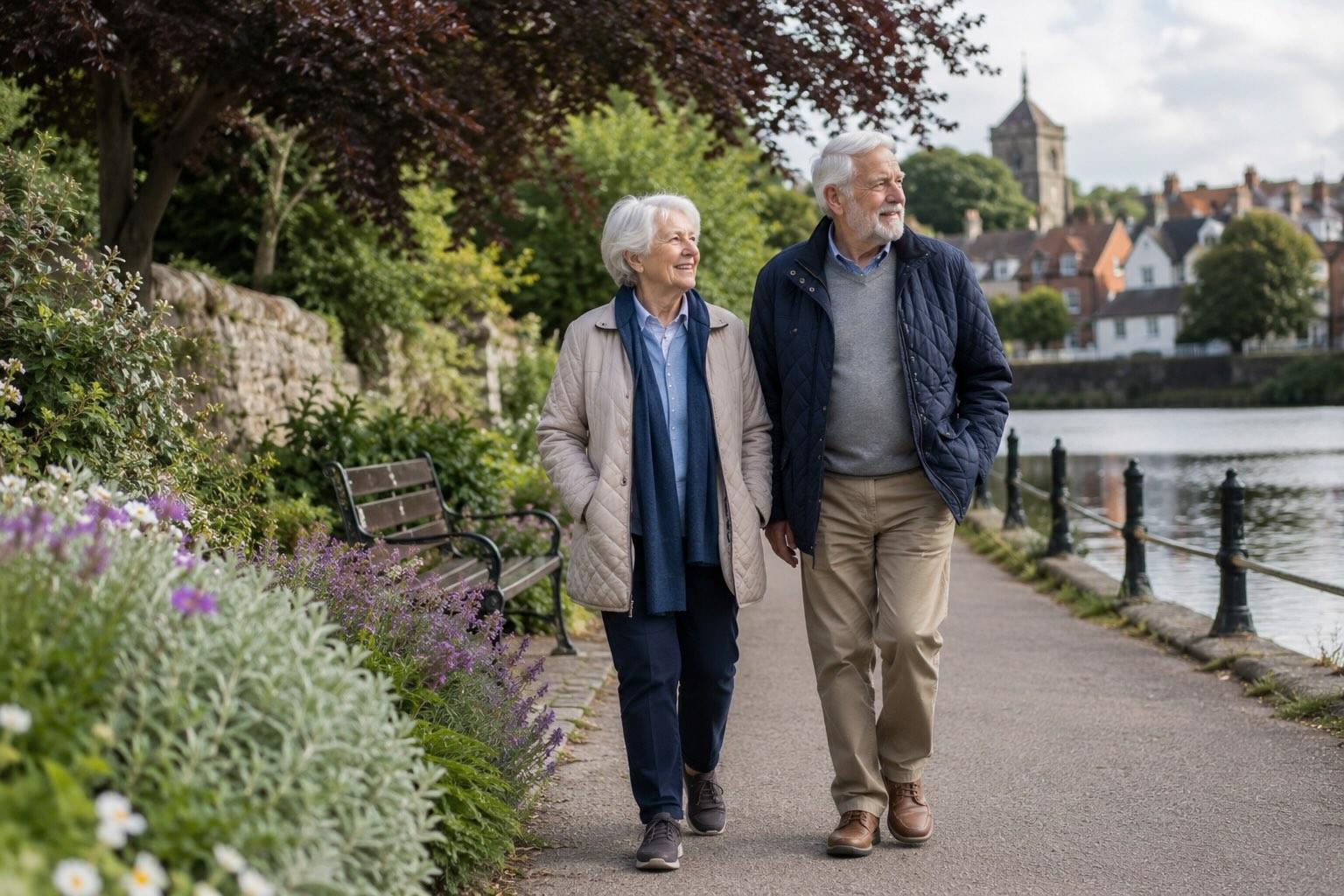
Most of us are familiar with the many health benefits of walking.
Regular walking has been linked to improved heart health, better blood sugar control, maintaining a healthy weight and even boosting mood.
Now, a new study published in the journal Neurology suggests that how fast you walk in later life may also be linked to brain health.
It has nothing to do with hitting 10,000 steps a day or taking a walk after every meal.
Instead, the researchers found that your usual walking pace may provide important clues about how well your brain is ageing.¹
The research found that adults aged 80 and over who walked significantly faster than others of the same age—known by researchers as “super movers”—were around 50% less likely to develop cognitive impairment during the study than those with a more typical walking pace.¹
Importantly, the study does not prove that simply walking faster will reduce your risk of dementia.
Rather, it suggests that maintaining an exceptionally brisk walking pace in later life may be a sign of healthier ageing and better brain health.
Researchers defined super movers as adults aged 80 years and over whose walking speed was at least 1.5 standard deviations faster than average for people of the same age and sex.¹
In simple terms, these are older adults whose usual walking pace is more commonly seen in people decades younger.
As lead researcher Dr Joe Verghese explains:
“We studied adults aged 80 and older to identify a unique group we call ‘super movers’—people whose walking speed is comparable to that of adults in their 50s and 60s. We then compared their cognition with that of other adults the same age to understand what makes them different.”
Researchers were interested in studying this unique group because previous work has suggested they tend to remain healthier than many of their peers as they age.¹
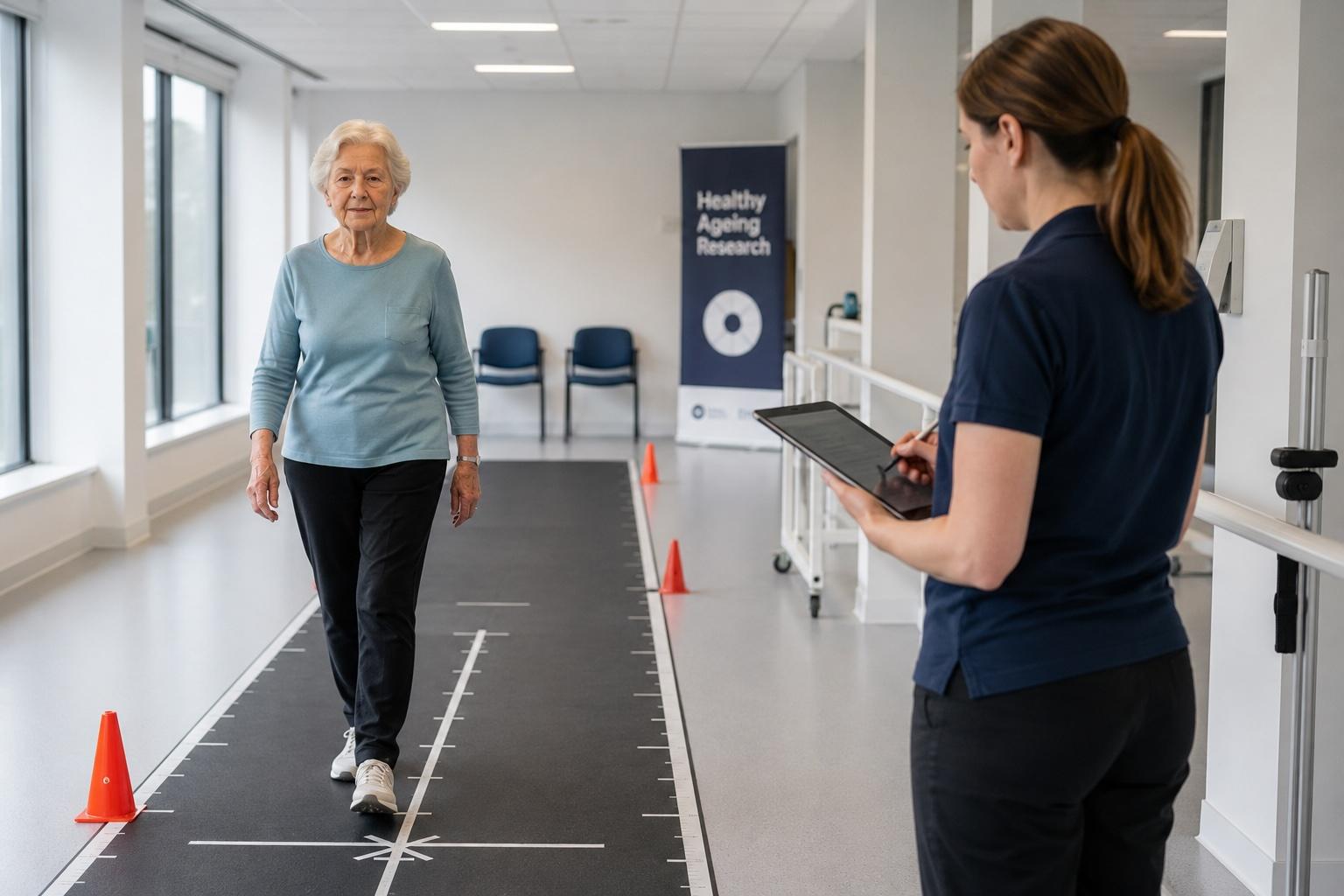
The researchers combined information from three well-established ageing studies involving nearly 5,000 adults aged 80 years and over.¹
They compared super movers with other older adults to examine whether they differed in:
Risk of developing cognitive impairment.
Changes in memory and thinking over time.
Brain structure using MRI scans.
Alzheimer’s disease-related changes found after death.
By bringing together data from multiple studies, the researchers were able to examine not only cognitive performance but also what was happening inside the brain itself.
The findings were striking.¹
Compared with other adults of the same age, super movers were:
Around 50% less likely to develop cognitive impairment during follow-up.¹
More likely to maintain their memory and thinking abilities over time.¹
More likely to have better-preserved areas of the brain involved in memory.¹
Across the different study groups, super movers showed slower decline in both memory and other cognitive functions, suggesting they experienced slower cognitive ageing overall.¹
One of the most interesting findings involved the hippocampus.
The hippocampus is a small structure deep within the brain that plays a crucial role in learning and memory. It is also one of the first regions affected in Alzheimer’s disease.
MRI scans showed that super movers had better-preserved hippocampal volume in several important subfields, suggesting healthier brain ageing.

Although super movers had better memory and lower rates of cognitive impairment during life, researchers found something unexpected.
When donated brain tissue was examined after death, they found no significant differences in Alzheimer’s disease or dementia-related brain pathology compared with other older adults.¹
Dr Verghese said:
“Even more surprisingly, despite having better cognitive function, they had similar levels of dementia-related brain pathology which suggests they may have resilience mechanisms that protect the brain from developing cognitive symptoms.”
This suggests that some people may have greater brain resilience, sometimes referred to as cognitive reserve. In other words, their brains may be better able to cope with age-related changes before symptoms appear.
Exactly why this happens remains unknown and is an important area for future research.
Walking may seem like a simple activity, but it actually depends on many different body systems working together. Your muscles, joints, heart, lungs, nervous system and brain all play an important role in determining how quickly and confidently you can walk.
According to study researcher Dr Nir Barzilai:
“Gait speed at 80 years of age and older is one of the best single predictors of overall physiological health because it integrates cardiovascular, musculoskeletal, neurological, and metabolic function simultaneously.”
He added:
“What this study captures isn’t just ‘movement is good for the brain’; it’s that whole-body biological aging pace shows up in how you walk, and that same pace protects every system.”
Rather than being simply a measure of fitness, walking speed may provide a valuable snapshot of overall health and the rate at which the body is ageing.
This is an important question. The answer is not necessarily.
This study found an association between faster walking speed and healthier brain ageing, but it does not prove that increasing your walking speed will reduce your risk of dementia.
Instead, walking speed may reflect overall health. People who remain healthier into their eighties may naturally continue to walk more quickly, and the same factors that help preserve physical function may also help support brain health.
Even so, regular physical activity remains one of the best-supported lifestyle habits for healthy ageing.²⁻⁴
As Dr Verghese advises:
“Regular exercise, managing chronic medical conditions, and paying attention to changes in walking or balance may help preserve both physical independence and cognitive function as we age.”
Most of us won’t become “super movers”, and that’s perfectly normal.
However, this research reinforces an important message: staying physically active throughout life is one of the best ways to support healthy ageing.
Simple habits that can help include:
Walking regularly.²⁻⁴
Keeping muscles strong with resistance exercises.²³
Working on balance and flexibility.²³
Managing conditions such as high blood pressure, high cholesterol and diabetes with the help of your GP.
Eating a balanced, nutritious diet.
Staying socially and mentally active.
Getting enough sleep.
Healthy ageing is influenced by many different factors, and no single habit can guarantee good brain health. However, looking after your body is one of the most practical ways to help support your brain as you get older.
This well-designed study found that adults aged 80 and over who walked significantly faster than their peers were around 50% less likely to develop cognitive impairment and showed signs of healthier brain ageing.¹
While the study does not show that simply walking faster prevents dementia, it highlights walking speed as an important marker of healthy ageing.
Researchers now hope that by understanding what makes these remarkable “super movers” different, they may uncover the biological and lifestyle factors that help protect the brain and support healthier ageing for future generations.

1. What is a super mover?
A super mover is someone aged 80 or over whose walking speed is significantly faster than average for people of the same age and sex.¹
2. Does walking faster prevent dementia?
No. This study found an association between faster walking speed and healthier brain ageing, but it does not prove that walking faster itself reduces the risk of dementia.¹
3. Why is walking speed important?
Walking speed reflects the combined function of the heart, muscles, joints, nervous system and brain. Researchers increasingly recognise it as a useful indicator of overall health in older adults.¹
4. What is the hippocampus?
The hippocampus is a region of the brain involved in learning and memory. It is one of the first areas affected by Alzheimer’s disease.¹
5. Should I try to walk faster?
Rather than focusing on walking speed alone, experts recommend staying as physically active as possible for your age and ability. Regular walking, strength exercises and balance training all contribute to healthy ageing.²⁻⁴
This article is for general information only and is not intended to treat or diagnose medical conditions. If in doubt please check with your GP first.
Jayakody O, Milman S, Barzilai N, Weiss EF, Wang C, Jin Y, Blumen H, Verghese J. Cognitive aging and brain health: a comparison of super movers vs nonsuper movers. Neurology. 2026;107(1):e214776. doi:10.1212/WNL.0000000000214776. PMID: 42302219.
World Health Organization. WHO guidelines on physical activity and sedentary behaviour. Geneva: World Health Organization; 2020.
NHS. Physical activity guidelines for older adults [Internet]. NHS; [cited 2026 Aug 7]. Available from: https://www.nhs.uk/live-well/exercise/physical-activity-guidelines-older-adults/
NHS. Walking for health [Internet]. NHS; [cited 2026 Aug 7]. Available from: https://www.nhs.uk/live-well/exercise/running-and-aerobic-exercises/walking-for-health/

Mediterranean Diet Slashes Early Death Risk in Women by Nearly 25%, Study Finds

Bananas: Effective in Lowering Blood Pressure New Study Suggests

Shedding Just 5%: The Small Weight Loss with Massive Benefits