When your back hurts, it is natural to worry that something has been damaged. You may want a scan to find the cause, or feel that you should rest until the pain disappears.
However, for most uncomplicated back pain, the most helpful starting point is usually to keep gently moving, continue with ordinary activities where possible and give the back time to recover.
An estimated 9.5 million people in the UK experience low back pain each year, including 5.8 million who experience severe pain.[8]
A major review published in JAMA found that around 90% of people seeking care have non-specific low back pain. This means the pain is not linked to an identifiable condition such as a fracture, infection, cancer, sciatica or spinal stenosis.[1]
You may also have seen reports that 95% of people with back pain do not need a scan. This figure comes from an Australian clinical care standard, which says that more than 95% of cases do not have a serious underlying cause.[7]
The two figures measure different things, but the practical message is similar: most back pain is not caused by a dangerous condition requiring an immediate scan or surgery.
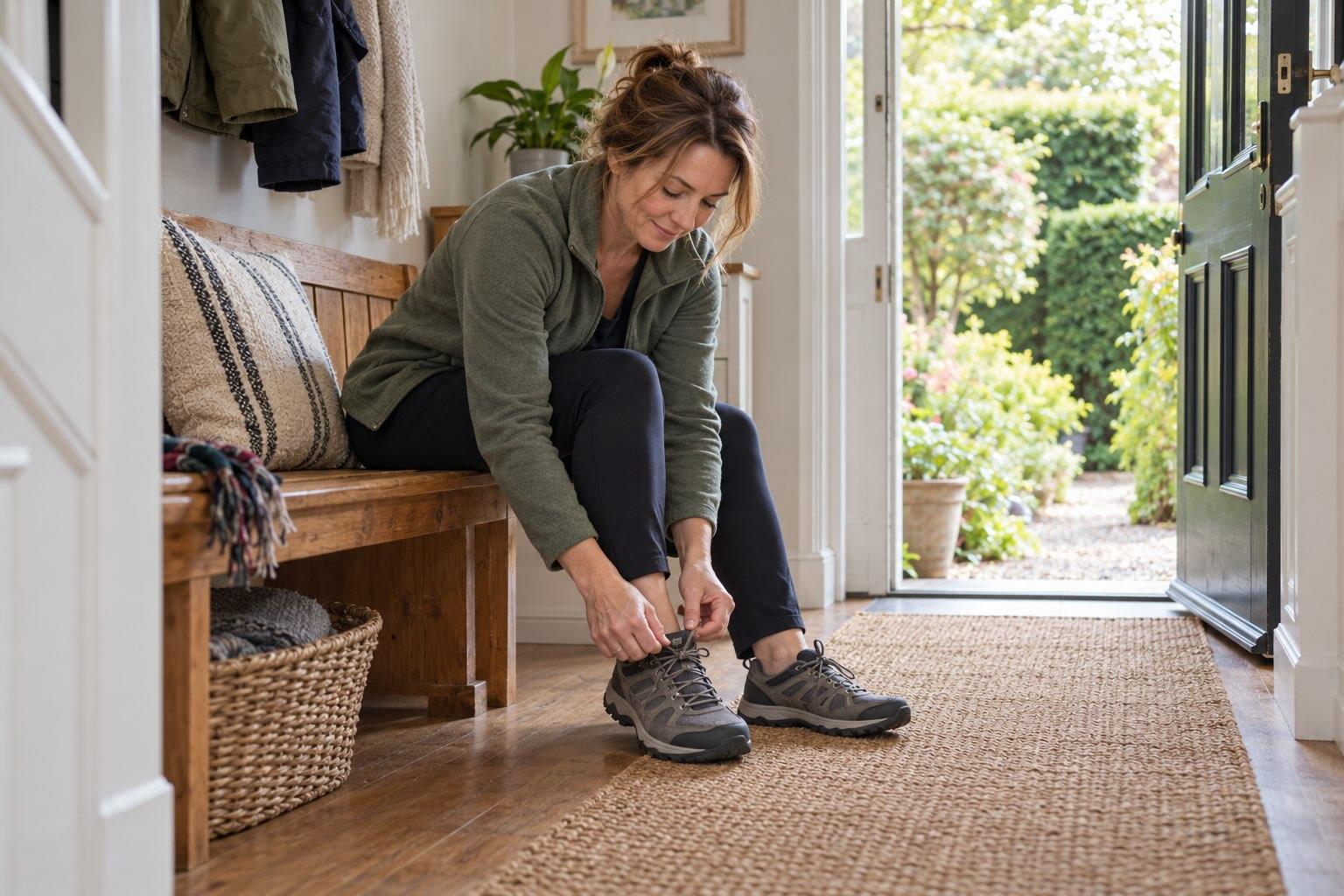
Take a short walk: Walking is a simple way to keep your back moving.
During a painful episode, start with a short walk around the house, garden or neighbourhood. A few short walks may feel more manageable than one long one.
Gradually increase the time and distance as your symptoms allow, without forcing yourself through severe pain.
For people whose back pain has lasted more than 12 weeks, a 2026 review of 13 clinical trials found that walking programmes reduced pain and disability.
The researchers suggested gradually building towards 30–40 minutes, three or four times a week, but shorter walks may also help. This is a guide for persistent pain, not a target you need to meet during a new flare-up.[2]
The 2024 WalkBack trial followed 701 adults who had recently recovered from low back pain.
Those offered a gradual walking programme, education and six physiotherapy sessions had a 28% lower rate of another activity-limiting episode than those who received no specific treatment.[3]
The median time before back pain returned was 208 days in the programme group, compared with 112 days in the comparison group.
Because the programme included education and physiotherapy support, the trial cannot tell us how much of the benefit came from walking alone.
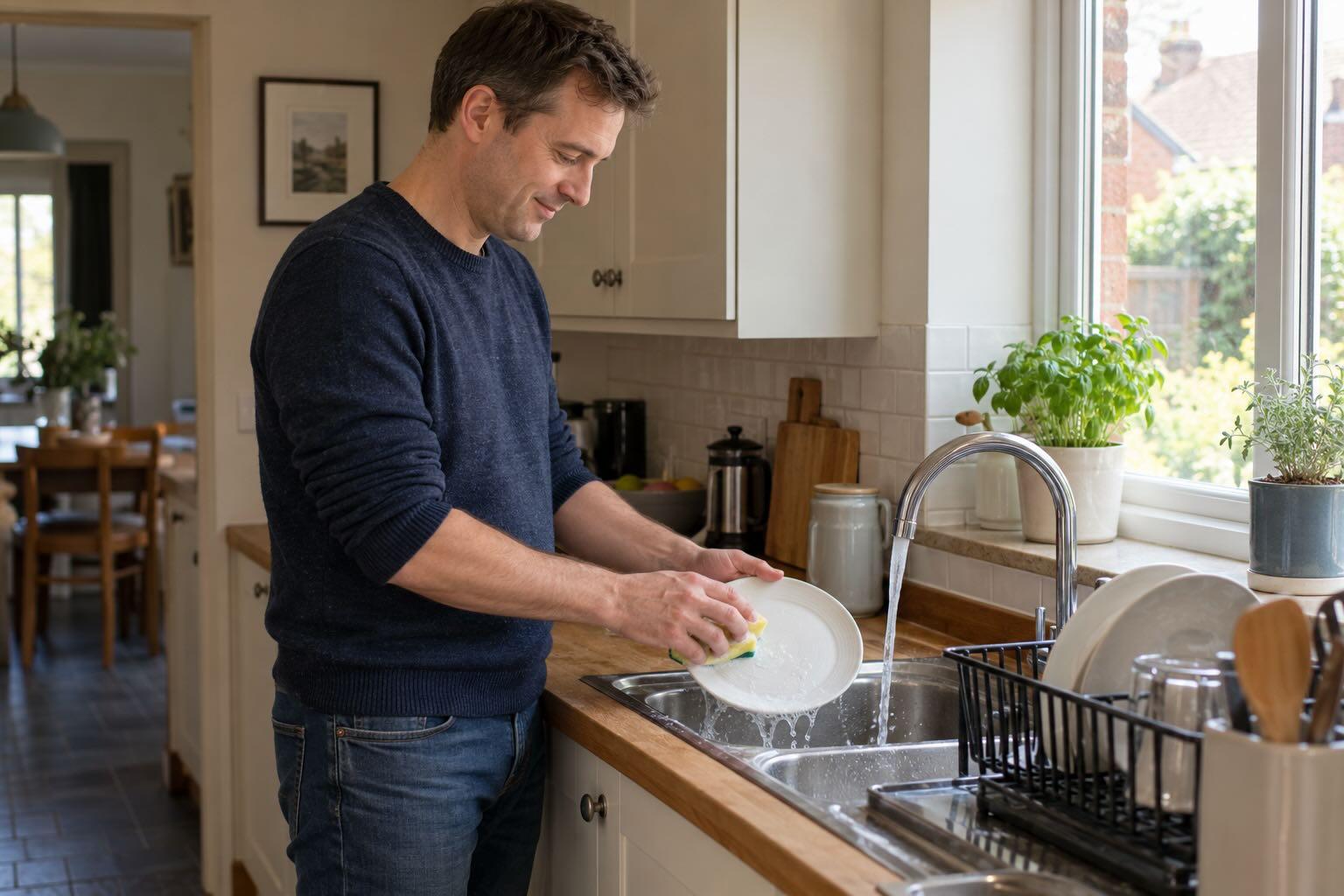
The NHS advises staying active and continuing with daily activities where possible.[5]
This does not mean immediately returning to heavy lifting or forcing yourself through severe pain. Temporarily reduce the most demanding jobs, change position regularly and gradually rebuild what you do.
Try not to remain in bed for long periods. Prolonged rest can reduce strength and confidence and may make the pain last longer.
The NHS suggests using an ice pack, or a bag of frozen peas, wrapped in a tea towel to reduce pain and swelling. A heat pack or hot water bottle, also wrapped in a tea towel, may help relieve stiffness or muscle spasms.[5]
An anti-inflammatory medicine such as ibuprofen may help some people remain active, but it is not suitable for everyone.
Paracetamol on its own is not recommended for back pain, although the NHS says it may sometimes be used with another painkiller. Ask a pharmacist or GP if you are uncertain, particularly if you take other medicines or have stomach, heart, liver or kidney problems.[4,5]
The NHS says back pain often improves by itself within a few weeks.[5]
Guy’s and St Thomas’ NHS Foundation Trust says most people recover from an episode of low back pain within six to eight weeks.[6]
That is approximately 42 to 56 days, although it is a typical recovery range rather than a deadline. Some people improve within days, while others take longer.
Back pain can also return. Guy’s and St Thomas’ reports that approximately one in three people experiences another episode within 12 months.[6]
If the pain is not improving after a few weeks, is getting worse or is stopping you from carrying out normal activities, contact your GP.
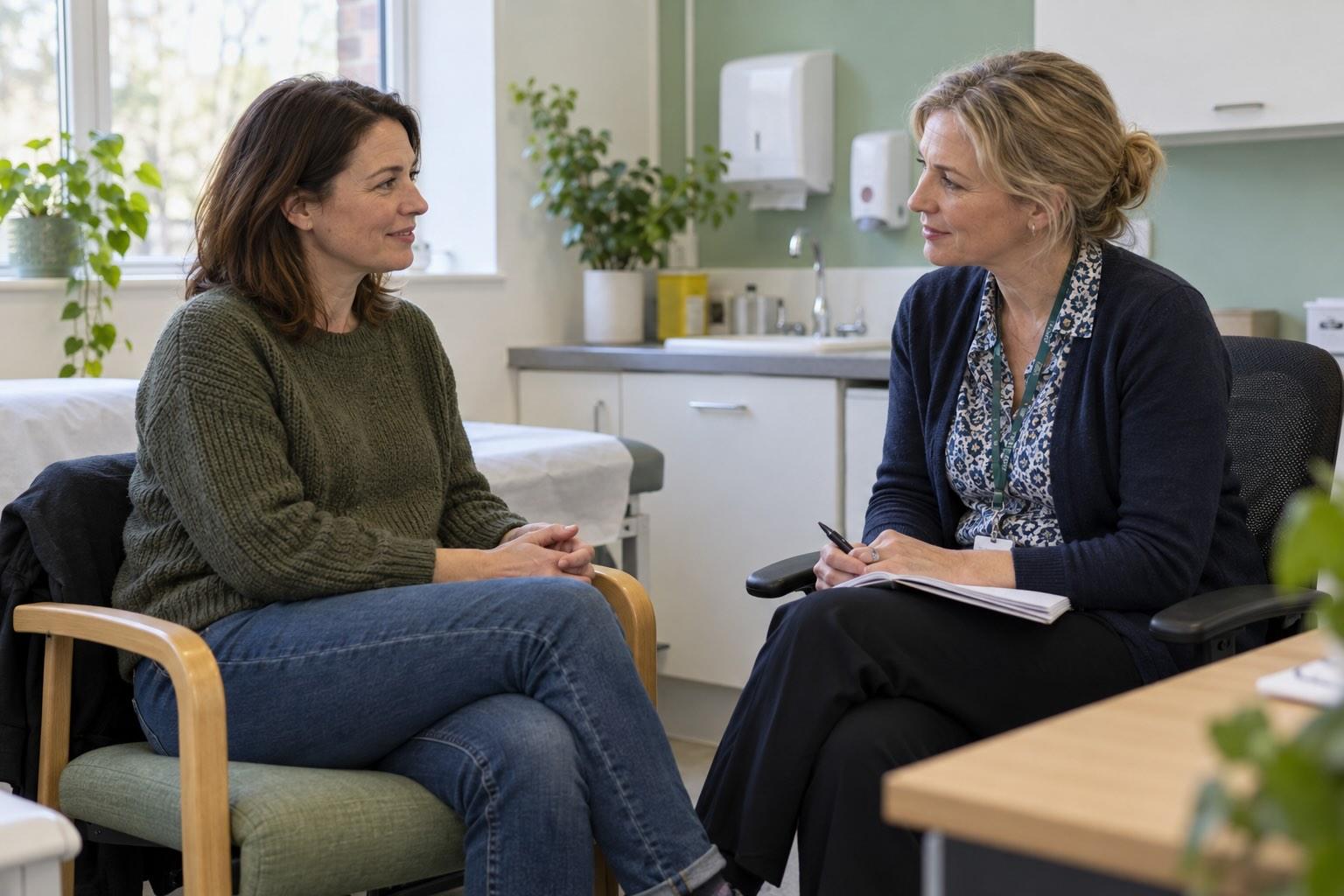
Scans often show disc bulges, joint changes and other signs of ageing in people who do not have back pain.
Guy’s and St Thomas’ says that, for most people with low back pain, MRI scans “cannot find the cause of pain”. It also explains that scan findings do not reflect how much pain someone has and rarely change how ordinary low back pain is managed.[6]
NICE therefore says imaging should not usually be offered for low back pain in a non-specialist setting. A scan is more likely to be useful when a clinician suspects a serious or specific condition, or when the result would change the treatment being considered.[4]
See a GP if your back pain:
has not improved after home care for a few weeks
is stopping you from carrying out normal daily activities
is causing concern or becoming difficult to cope with
does not improve after resting or is worse at night
becomes worse when sneezing, coughing or opening your bowels
comes from the upper back, between the shoulders
occurs with unexplained weight loss, a lump, swelling or a change in the shape of your back.[5]
Ask for an urgent GP appointment or contact NHS 111 if the pain is severe and starts suddenly, is getting worse quickly, or occurs while you feel hot, cold, shivery or generally unwell.[5]
Call 999 or go to A&E if back pain occurs with:
pain, tingling, weakness or numbness in both legs
loss of feeling around the genitals or anus
difficulty passing urine or loss of bladder or bowel control
a new change in sexual sensation or function
chest pain
pain that started after a serious accident.[5]
Do not drive yourself to A&E. Ask someone to drive you or call 999 for an ambulance.
For most people, a painful back does not mean a dangerously damaged back.
Unless warning signs are present, try a short walk, keep gently moving, pace your normal activities and use simple symptom relief when needed.
Most episodes improve within a few weeks. Regular walking may also help people with persistent pain and reduce the likelihood of another episode after recovery.

1. Does severe pain mean my back is badly damaged?
Not necessarily. The intensity of pain does not always reflect the amount of physical damage. However, severe pain that begins suddenly, worsens rapidly or occurs with warning signs needs medical assessment.
2. Is surgery sometimes needed?
Yes, but it is not a usual treatment for non-specific back pain. Surgery may be considered when there is an identifiable condition it can treat, such as persistent sciatica where non-surgical treatment has not helped and the scan findings match the symptoms.[4]
This article is for general information only and is not intended to treat or diagnose medical conditions. If in doubt please check with your GP first.
Cashin AG, Chou R, Weimer MB, McAuley JH. Low back pain: a review. JAMA. 2026 Jul 14;336(2):144-58. doi:10.1001/jama.2026.9631. Epub 2026 Jun 15. Available online
Núñez-Cortés R, et al. How much walking is enough for chronic low back pain? A systematic review and dose-response meta-analysis. PM&R. 2026. doi:10.1002/pmrj.70189. Available online
Pocovi NC, Lin C-WC, French SD, et al. Effectiveness and cost-effectiveness of an individualised progressive walking and education intervention for the prevention of low back pain recurrence in Australia: a randomised controlled trial. Lancet. 2024;404(10448):134-44. doi:10.1016/S0140-6736(24)00755-4. PubMed
National Institute for Health and Care Excellence. Low back pain and sciatica in over 16s: assessment and management. NICE guideline NG59. NICE recommendations
NHS. Back pain. Last reviewed 5 March 2026. NHS back pain guidance
Guy’s and St Thomas’ NHS Foundation Trust. Low back pain. NHS low back pain information
Australian Commission on Safety and Quality in Health Care. Low Back Pain Clinical Care Standard. Sydney: ACSQHC; 2022. Clinical care standard
Arthritis UK, The State of Musculoskeletal Health 2025, p. 54.

Mediterranean Diet Slashes Early Death Risk in Women by Nearly 25%, Study Finds

Bananas: Effective in Lowering Blood Pressure New Study Suggests

Shedding Just 5%: The Small Weight Loss with Massive Benefits